Electrocardiogram (EKG)
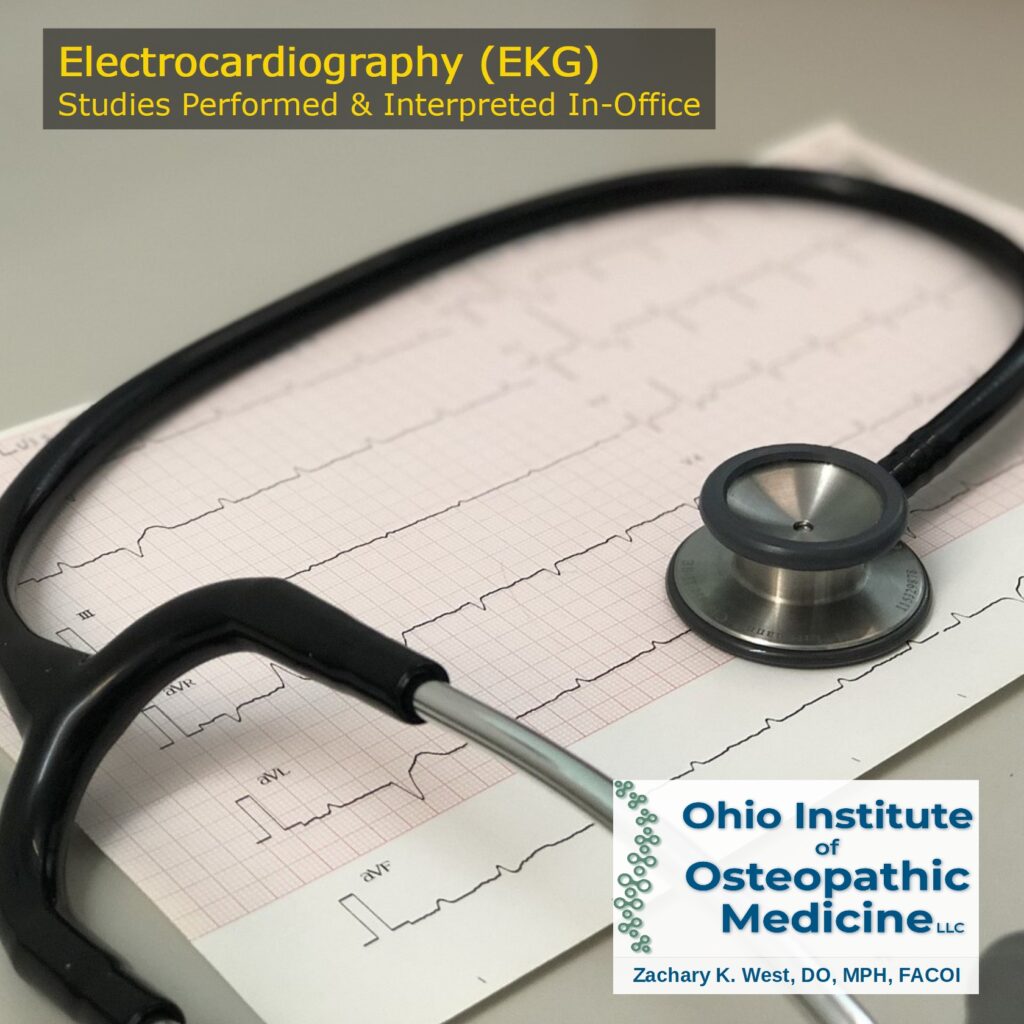
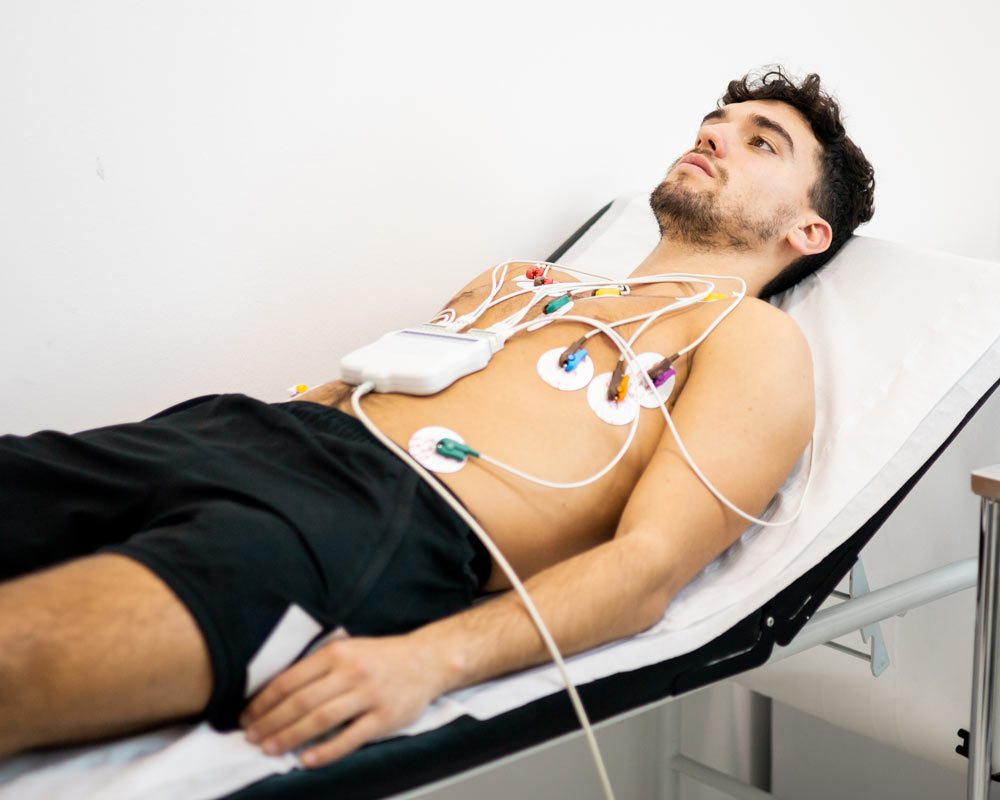
An electrocardiogram (EKG) is a quick, painless test that records the electrical activity of the heart. It is a noninvasive method used to help diagnose common heart problems. During the test, the patient lies flat on an exam table while the nurse or physician places 12 small adhesive electrode sensors to the patient’s skin on the chest, arms and legs. These sensors are connected via wires to a machine that traces the patient’s heart electrical impulses on a screen or graph paper.
An EKG can be used to help diagnose and monitor conditions affecting the heart, such as:
- Arrythmias – where the heart beats too slowly, too quickly, or irregularly
- Coronary Artery Disease – where the heart’s blood supply is blocked or interrupted by a build-up of fatty substances
- Heart Attack (Myocardial Infarction) – where the supply of blood to the heart is suddenly blocked
- Cardiomyopathy – where the heart walls become thickened or enlarged